Optical Character Recognition (OCR) is one of the most advanced methods of data entry that can help a business concern increase its operational capabilities. Emerging technology is developed using different languages ??and large datasets. OCR document scanning helps businesses convert typewritten or printed text data into editable and searchable machine-encoded text. Businesses can therefore clear their customer queries and make more informed business decisions by making the most of the information gained through OCR conversion.
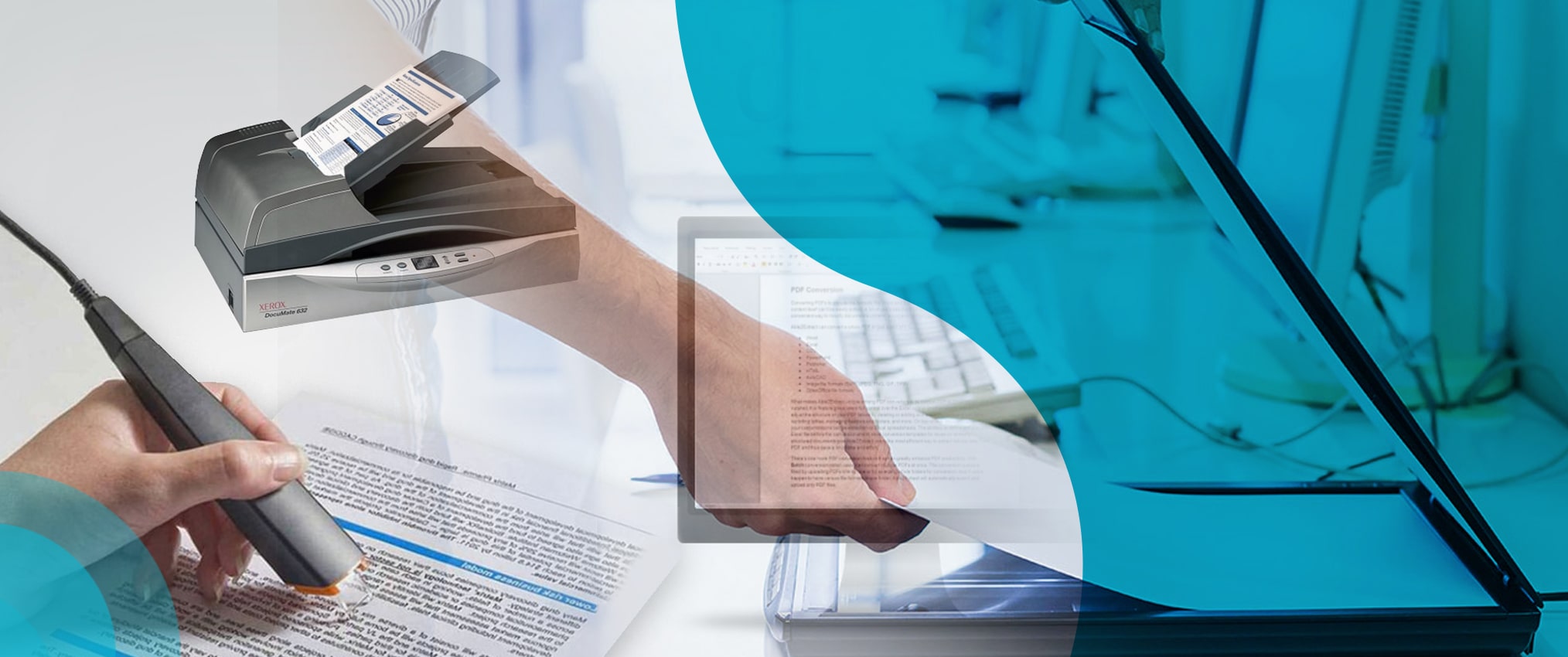
This technology allows business concerns to use the collected data much faster with greater precision. This is a great business approach that businesses can use to provide better customer service and expand their operations to the next level. A business that thrives on customer inputs should incorporate OCR in its business tactics. This will enable the business to gather information from the customers with ease. Companies need to incorporate OCR technology into their marketing strategy to generate more profits in the long run.
Any business in banking, mortgage, legal, healthcare, educational institutions, cooperates, payroll, sectors, etc. can get benefit from the OCR service. Any paper document can be scanned and kept digitally. To give some examples:
- Paper Documents
- payroll information
- Tax documents
- Length and complicated legal documents
- Business confidential documents
- Handwritten contact information
- Bank Forms
- Research Forms
- Online Forms
- Medical and Patient Record Forms
- Surveys
- Magazine
- Periodicals
- Insurance Forms etc.
6 Advantages of using OCR in Business
Now lets discuss the top 6 advantages of using OCR in a business.
- Reduction in Errors – No business concern wants to see errors in their documents and data. With the help of OCR, businesses can drastically reduce errors from copying from one document to another or transcription errors that may occur during the conversion stage and get the correct information at their fingertips.
- Productivity Improvement – Businesses can see a difference in employee productivity as they no longer have to search through big files placed in the document room to gather information as the soft copy is easily accessible to them with the help of OCR.
- Easy Access – Users can start searching documents directly by name and reference number without even having to keep an electronic version of the document with OCR installed on their systems. With the help of OCR, it becomes easy to search through a large database containing a large number of images and information.
- Data Security – Securing company data is very important for business concerns. Protecting data not only means keeping documents or files in safe custody from hackers, but it is also important to protect documents from natural calamities as paper documents can be easily destroyed. With OCR, businesses need not worry as they are never going to face the threat of data loss.
- Cost reduction Going for OCR will help businesses on cutting down on employing additional staff to carry out the work, which is one of the prime advantages of OCR document scanning methods. This tool also helps in cutting down on various other costs, such as copying, printing, shipping, etc.
- High level of Accuracy – By applying OCR, businesses can experience a high level of accuracy in data stored by them. Customers can get accurate responses to the quires they have raised with the help of OCR which searches through documents for their quires.
-
All business concerns take effective steps to reduce waste, and going paperless is a great way to reduce paper production while using less energy. As many businesses have to deal with large amounts of paper daily, going electronic can be a very wise option, document scanning services can help organizations looking to reduce the paper load from their office and digitize paper quickly. This procedure often helps business concerns save money, gain access to data much faster, ensure data is secure, and focus on their core business activities.
Using Offshore India Data Entry as your OCR partner will help you save time and money. We offer a wide range of services at cost-effective rates without making any compromise on the quality.
[vc_row][vc_column][vc_single_image image=”2768″ img_size=”full” alignment=”center” style=”vc_box_shadow_3d” onclick=”zoom”][/vc_column][/vc_row][vc_row][vc_column][vc_column_text]
OCR or Optical Character Recognition technology is the topmost technology that could be used for data capture services. The technology allows capturing data quickly and efficiently from different information sources. The data entry companies could make use of the OCR technology for capturing the data from the files in any format and convert the information into desired electronic format. OCR services involve converting the scanned images of handwritten and typewritten text to machine text.
Through the features, and advantages let us see how OCR technology helps in data capture services.
[/vc_column_text][/vc_column][/vc_row][vc_row][vc_column][vc_custom_heading text=”Features of OCR Services Utilized in Data Capture” font_container=”tag:h2|font_size:20|text_align:left|color:%230a0a0a” google_fonts=”font_family:Cabin%3Aregular%2Citalic%2C500%2C500italic%2C600%2C600italic%2C700%2C700italic|font_style:400%20regular%3A400%3Anormal”][/vc_column][/vc_row][vc_row][vc_column][vc_column_text]
- Performing data extraction and OCR classification with accuracy.
- Great customizability and integrity
- Improved expandability and scalability
- Tracking of the documents in real-time.
- Single point of entry.
- Classifying the documents automatically and helps in routing to the classification.
- Audit trail while performing the data capture process.
- Availability of different exporting options.
- Performing better data scanning services.
These features help in conducting the data capture tasks effectively.
[/vc_column_text][/vc_column][/vc_row][vc_row][vc_column][vc_custom_heading text=”Advantages of Utilizing the OCR Technology for Data Capture” font_container=”tag:h2|font_size:20|text_align:left|color:%230a0a0a” google_fonts=”font_family:Cabin%3Aregular%2Citalic%2C500%2C500italic%2C600%2C600italic%2C700%2C700italic|font_style:400%20regular%3A400%3Anormal”][/vc_column][/vc_row][vc_row][vc_column][vc_column_text]
Data capture utilizing OCR technology offers many advantages while comparing it with the manual data capture process. They include:
[/vc_column_text][/vc_column][/vc_row][vc_row][vc_column][vc_column_text]
- No Form of Missed Information
Through OCR one could obtain the desired information from different sources. They help in recognizing the handwritten documents and multiple typefaces. This recognition allows converting the text present in the paper to digital format and this applies to all form types and documents.
[/vc_column_text][/vc_column][/vc_row][vc_row][vc_column][vc_column_text]
- Better Use of Time
With OCR-based data capture, data could be processed more effectively compared to the manual methods. The manual process takes one or two days for completing the task. While OCR-based data capture allows data processing in a short period with minimum errors.
[/vc_column_text][/vc_column][/vc_row][vc_row][vc_column][vc_column_text]
- Better Form of Security
OCR-based data capture allows solving many security issues associated with paper. Paper documents could be easily damaged and are difficult to store. Security becomes a question mark here as everyone has access to the important papers. By using OCR-based data capture, there are sophisticated user access logs and controls, thereby achieving better security.
[/vc_column_text][/vc_column][/vc_row][vc_row][vc_column][vc_column_text]
- Minimizing the Errors
The techniques like document scanning, character recognition, and verifying take place effectively with fewer errors. Compared to the manual approach, the OCR services are found to be effective which involves the use of less time, and resources for implementing an error-free data capture process.
[/vc_column_text][/vc_column][/vc_row][vc_row][vc_column][vc_column_text]
- Better Storage and Retrieval
Through OCR and data scanning services, the data capture documents could be stored electronically and could be properly maintained. Hence fast retrieval of the documents is possible with minimum errors.
[/vc_column_text][/vc_column][/vc_row][vc_row][vc_column][vc_column_text]
Through the above advantages and features, one could understand how better OCR is for the data capture and data scanning services. Thus, OCR could act as the main tool for data capture.
OCR technology makes use of the desired scanning process to be effective through our strategies involved in it. By better verification and validating process, one could improve the data capture process. And allow better storage and retrieval of the data.
Being an outsourcing company, Offshore India Data Entry provides services like scanning, indexing, data processing, data entry, data conversion, web research, and much more. Make use of our services by mailing us at info@offshoreindiadataentry.com.
[/vc_column_text][/vc_column][/vc_row][vc_row][vc_column][vc_facebook][/vc_column][/vc_row]
[vc_row][vc_column][vc_single_image image=”2473″ img_size=”full” alignment=”center”][/vc_column][/vc_row][vc_row][vc_column][vc_column_text]
Business firms outsource OCR services (Optical Character Recognition) for invoice and bill processing that converts handwritten or printed documents into machine-encoded text. These services are highly affordable, generate accurate outputs, at fast turn times. And it is now integrated with artificial intelligence (AI) that made the process a game-changer.
Data extraction and data capture procedures are now done with AI-integrated OCR technology for invoice processing and bill processing. It helps in making the contents of these documents into machine-readable text, with its accurate analysis.
The accuracy levels gained with this holistic technological strategy has made it popular and much in demand. It was able to surpass the physical or paper invoice data entry or bill entry hassles, saving unwanted operational costs, resources, time and in-house employee efforts.
These advanced and intuitive technology has been crucial for global business enterprises to streamline operations and in enhancing their core aspects. As a result, there are now leaner processes with quicker, timely, and accurate results that help organizations to optimize their costs to gain a leading competitive edge.
But how exactly does OCR and AI help with automated processing of invoices and bills? Lets find out.
The inconsistencies in invoices and bills have completely random standards, meaning each document looks different. So OCR services are now integrated with AI that trains the model using a large number of templates that addresses invoice inconsistencies, layouts, clarity, etc. The learning curve of this technology helps it with data capture that extracts the relevant information paving the way towards accurate invoice processing and bill processing.
The technology also uses complexities that are found in real-world documents. The inconsistencies encountered in these documents are of imperfect printing, scanning of the documents using low-quality office scanners, skewing due to scanning done at an angle, or bulk scanning together with other documents.
With the integration of AI, the processes can now accurately read any random invoice data entry or bill entry information. This intelligent technology is highly responsible for the automated approach in OCR.
Its approach in invoice processing and bill processing can automatically determine where the relevant or critical information lies in a document for data capture irrespective of the documents format.
The intelligence of this technology automatically identify and extracts a wide range of business-critical information according to the specific requirements of each organizations invoice data entry and bill entry processes. Even if there are noise inconsistencies in documents, it will not affect the process of extraction of relevant information.
Another approach is where the AI can be directly dragged and dropped into invoice and bill processing workflows and for seamlessly integrating it with other vital document processing potential. This also allows accurate invoice data entry and bill entry into the correct back-end systems enabling comprehensive automation.
The integration of AI in invoice and bill processing has been crucial for organizations to achieve business efficiency, cost-savings, to make the right business decisions for growth and development. The self-learning capabilities of these AI models are sure to enhance OCR services substantially over time with more of its real-world applications. Hence all the processing pains are being eliminated gradually leading to automated technology well into the future.
[/vc_column_text][/vc_column][/vc_row][vc_row][vc_column][vc_facebook][/vc_column][/vc_row]
